
 |
A stunning collection of work by master photographer Manuel Álvarez Bravo reveals how he provided an imprint of Mexican culture and identity that went beyond the mere documentary
Manuel Alvarez Bravo: Photopoetry
John Banville, Jean-Claude Lemagny and Carlos Fuentes
2008, Thames & Hudson
336 pages, hardback, 374 plates
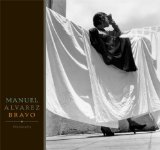


Reviewed by Georgina Jiménez
MANUEL ÁLVAREZ BRAVO was one of those few people who could happily make it to 100 and, even during his last days, when everyone was hoping he would bounce back from a chest infection, he felt the urge to practise the art that distinguished him from all others: photography.
As he emerged from a spell in hospital, to thank the doctors who treated him he asked for a camera as he was saying goodbye – but none was available. Two days later, the eyes of this follower of images would close for ever.
In Photopoetry, the reader (and viewer) can enjoy 374 tritone illustrations by the most significant force in Mexican photography arranged in chronological order along with their original captions – the ultimate tribute to a master photographer and an excellent showcase for those who would like to familiarise themselves with his work during an 80-year career.
Born in a family of eight children from a poor barrio at the start of the 20th century, Álvarez Bravo became a breadwinner at the age of 12, when his father, also a photographer, died.
Later, a neighbour lent him a Premo 12, which would determine the direction of the rest of his life. Álvarez Bravo tried to become a homeopath and an accountant – he was very good with numbers – but his love of light and lines led him to the Academia de San Carlos, where he trained as an artist. Seeking a quicker medium for capturing images in still life, he opted for the camera, and soon recognised photography’s poetic and journalistic potential. He held his first exhibition at the Primer Salón Nacional in 1922.
An important early influence was his friend, the German photographer Hugo Brehme, who encouraged him to buy his first camera.
Tina Modotti
In 1927, the Mexican photographer met Tina Modotti who, spotting Álvarez Bravo’s lyrical side, excitedly sent some of his photographs to her lover Edward Weston who was at the time preparing an exhibition. The photos arrived late but Weston, who was taken by Álvarez Bravo’s witty style, congratulated him on his work.
In 1930, while Sergei Eisenstein was filming ¡Qué viva México!, Álvarez Bravo was put in charge of stills. When Modotti was expelled from México after being accused of a political assassination, he inherited her post and camera to photograph the work of Mexican muralists such as Diego Rivera and José Clemente Orozco as well as public artefacts for the magazine Mexican Folkways.
Álvarez Bravo’s photographic observation of urban and rural life in this period can be seen as imaginative, providing an imprint of Mexican culture and identity beyond the mere documentary. His timing could not have been better, as he was able to witness Mexico’s post-revolutionary cultural and political commotion (see the picture of Rosendo, the assassinated striking worker).
However, the main question at the time for Álvarez Bravo as a photographer was what to do with the intrinsic exoticism of México. Although his favourite subjects were the sleepy countryside, the city and religious and vernacular objects, he adopted a staunch counter-picturesque posture, and was open to influences from other masters of photography such as Eugène Atget, Walker Evans, Julien Levy, Henri Cartier-Bresson and Paul Strand.
Álvarez Bravo developed his own style by capturing an element of surprise. His work, “Good Reputation Sleeping” (La buena fama durmiendo) was originally commissioned by André Breton for the cover of his magazine Minotaure, but was not used due to the raw nudity of the subject.
In the 1940s, Álvarez Bravo’s work consolidated into a more rigorously surreal, abstract, geometrical style within the everyday human element, bringing the viewer towards the symbolic. Much of his work in this period was in the film industry.
Photographic museum
In 1980, the president of the ruling council of the Fundación Cultural Televisa, art collector and producer Jacques Gelman, decided to create a photographic museum in México. Gelman suggested Álvarez Bravo as curator in charge of the initial collection, and the photographer visited galleries, museums, photographers and collectors in Europe and the United States to acquire works of international interest produced in the 19th century, such as William Henry Fox Talbot, Hippolyte Bayard, Sabatier-Blot (Louis-Jacques-Mandé Daguerre’s assistant) and even correspondence between Niépce and Daguerre.
The project was not concluded as, in 1986, Álvarez Bravo decided to withdraw in order to continue his work as a photographer, and he was active until his death.
Photopoetry includes over 30 unpublished masterpieces and includes a preface by Álvarez Bravo’s widow, Colette Alvárez Urbajtel, and essays by Booker prize-winning novelist John Banville, the curator of photography at the Bibliothéque Nationale of Paris, Jean-Claude Lemagny, and another Mexican legend, the novelist and essayist Carlos Fuentes.
Georgina Jiménez is a Mexican freelance writer
Categories: Mexico, North America